Healthcare systems for what is known—and what is uncertain.

Healthcare intelligence, engineered for certainty and uncertainty.

Sterling Health Technologies develops clinician-led systems that combine deterministic clinical logic with probabilistic intelligence—creating technology that is structured, adaptive, and accountable.

Sterling intelligence model
RulesContextEvidenceJudgment
Clinical precisionExplainable intelligenceHuman authorityContinuity across care

A disciplined approach to healthcare AI

Two modes of reasoning.
One accountable system.

Healthcare is neither entirely rule-based nor entirely predictable. Reliable systems need the precision of deterministic logic and the flexibility of probabilistic reasoning—with clear boundaries between them.

01

Deterministic layer

What must be true.

Rules, constraints, classifications, and safety gates provide a stable clinical foundation.

  • Validated rules, classifications, and thresholds
  • Required safety checks and contraindications
  • Explicit workflow states and escalation pathways
  • Reproducible outputs from the same inputs
02

Probabilistic layer

What may be true.

Models surface patterns, likelihoods, and uncertainty without disguising estimates as facts.

  • Pattern recognition across complex clinical context
  • Risk estimates expressed with confidence and uncertainty
  • Prioritization of likely explanations or next questions
  • Adaptive support informed by longitudinal information

The governing layer

Clinical judgment remains in control.

Technology can organize, calculate, identify, and suggest. Licensed professionals interpret the complete patient context and determine care.

Platforms in development

Designed where healthcare loses continuity.

Our work begins with practical breakdowns in understanding, decision support, documentation, and follow-through.

MyHealthVaultAI Mobile

One place to remember what happened next.

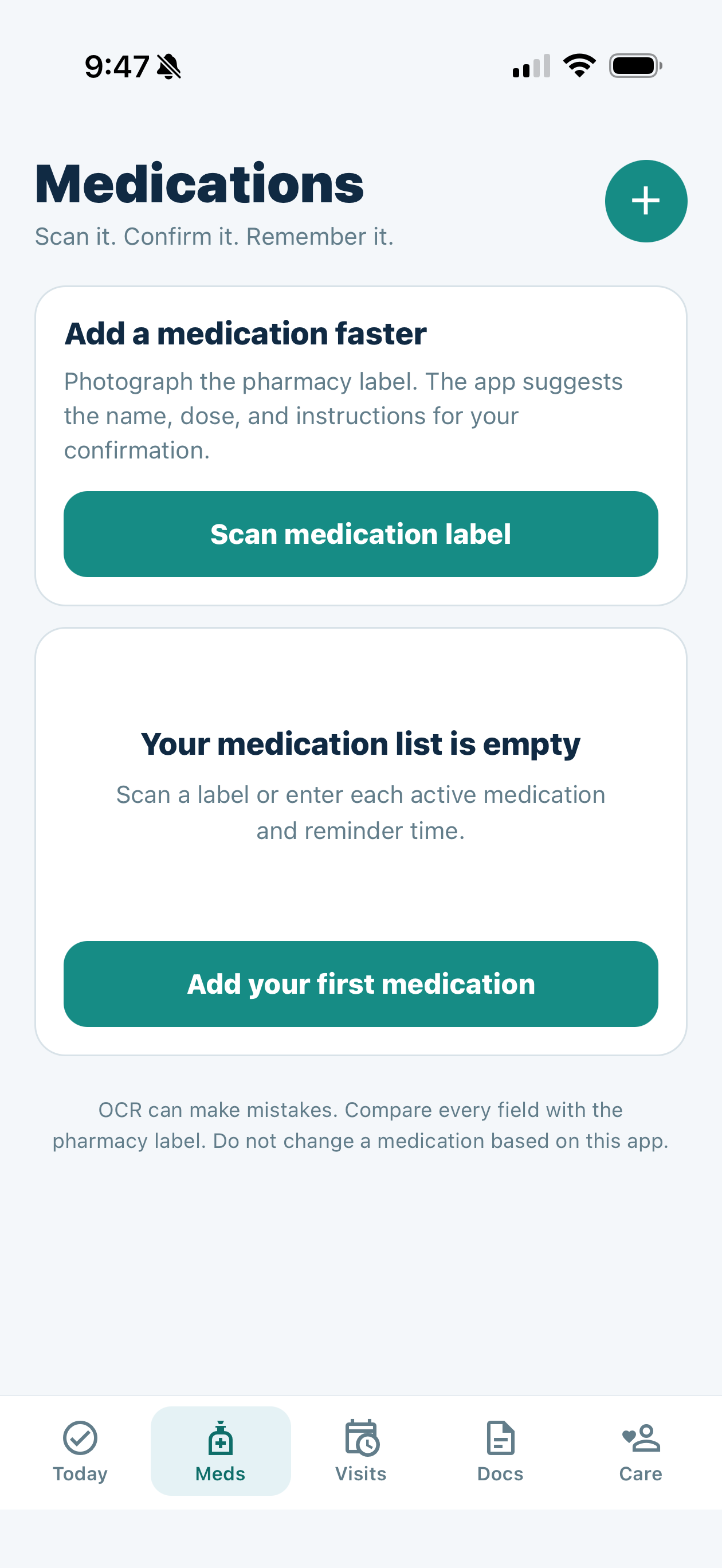
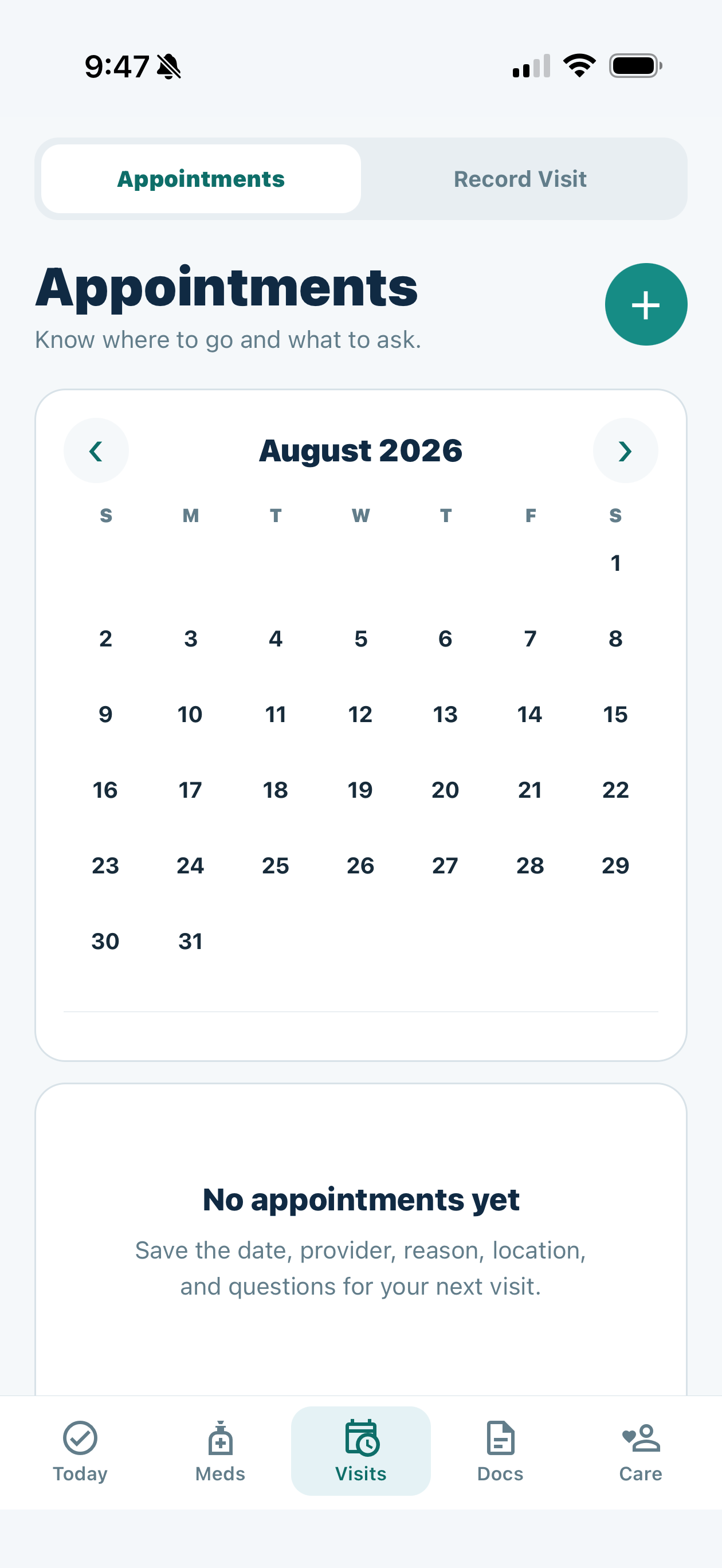
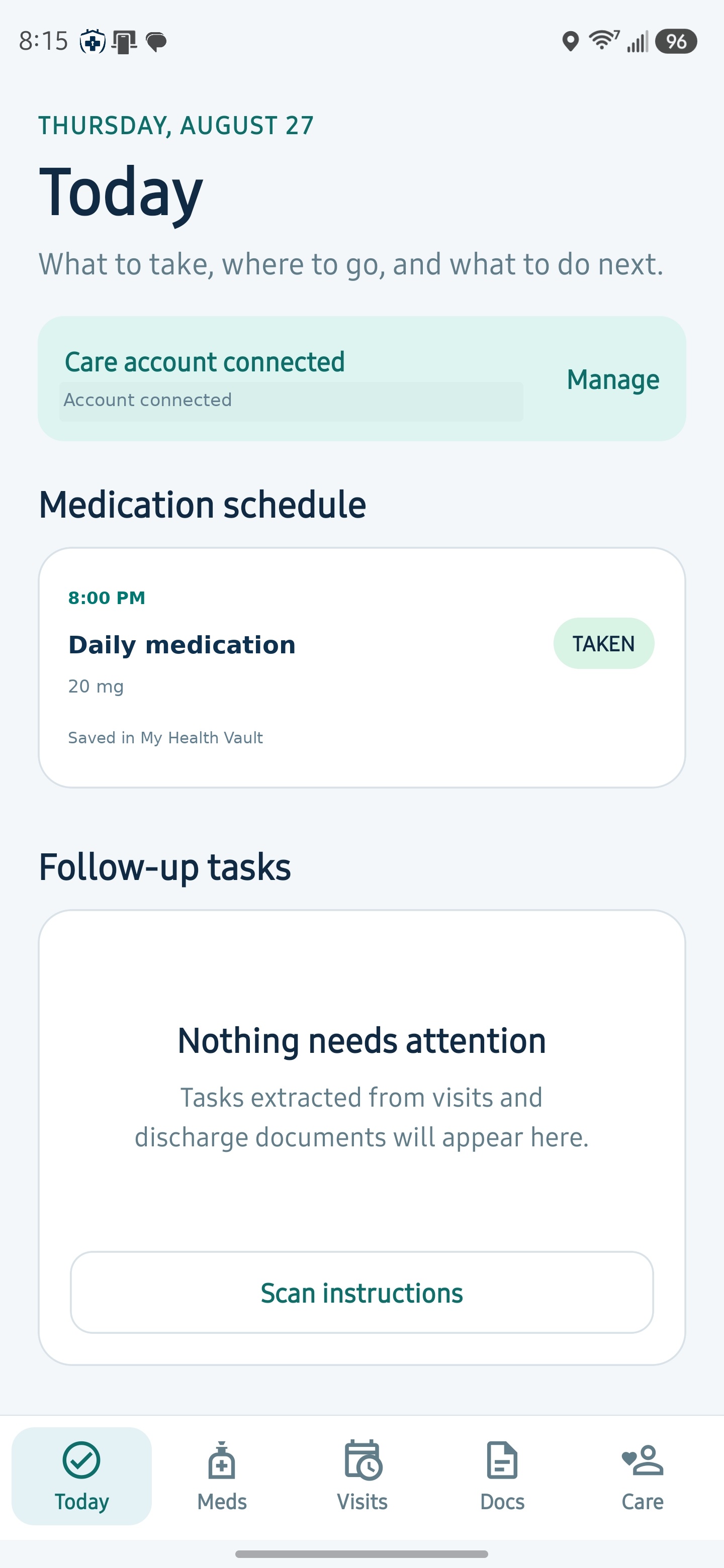
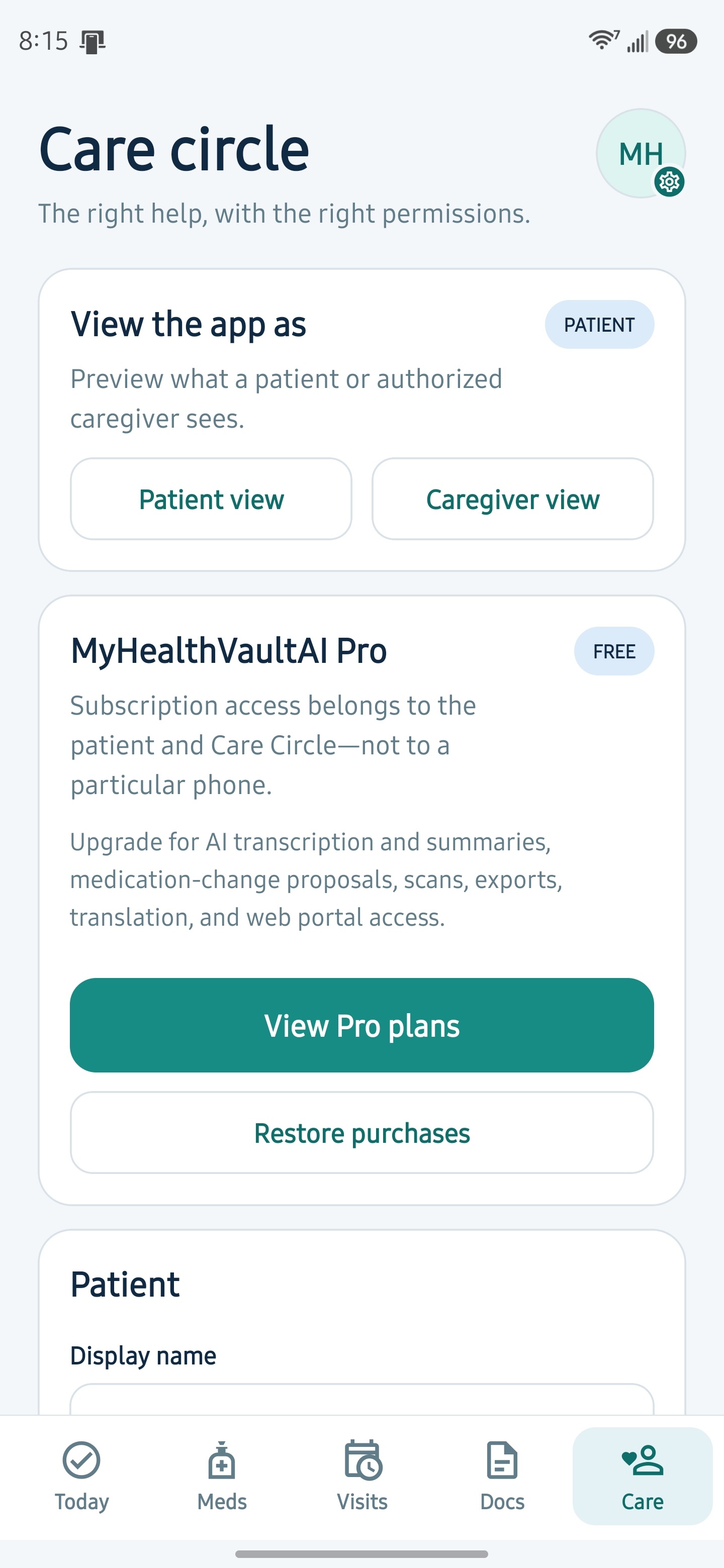
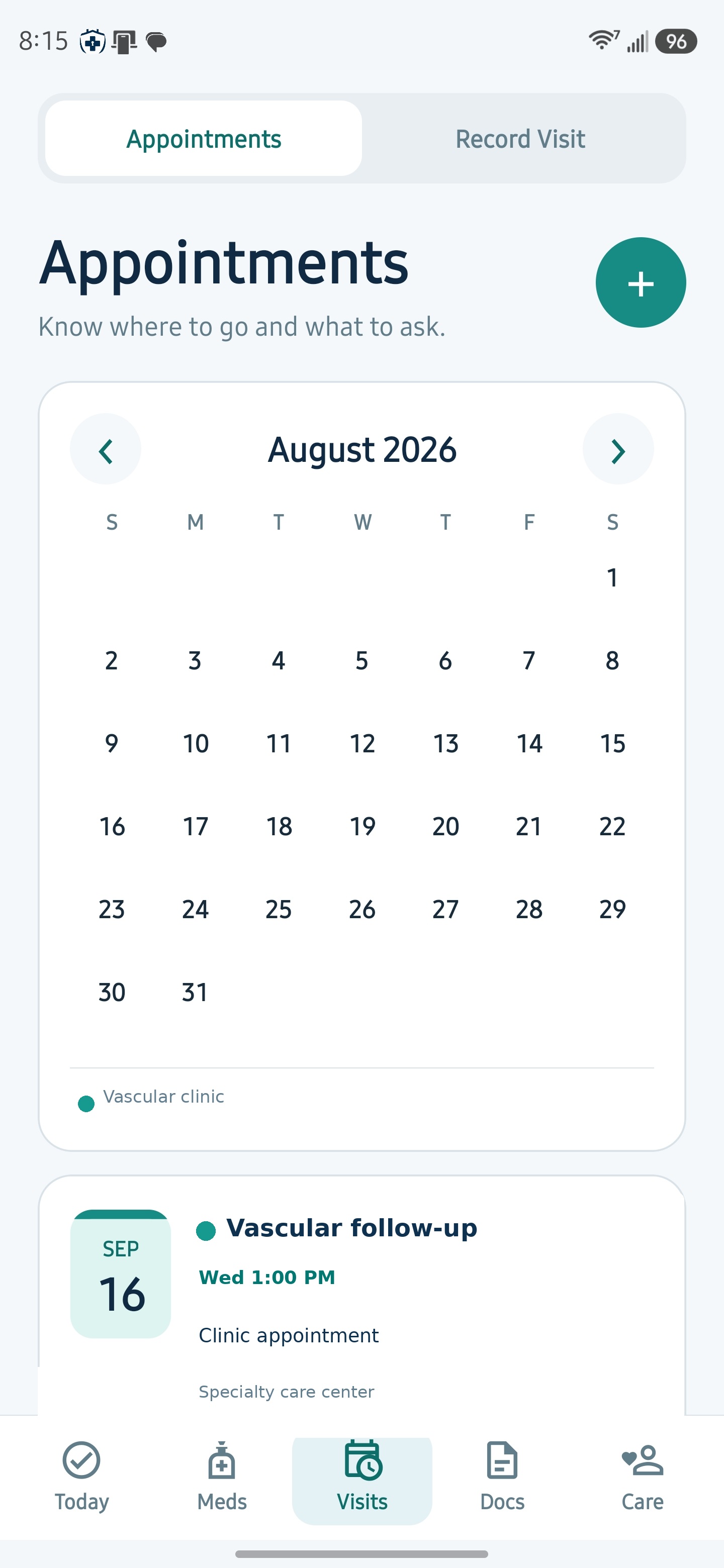
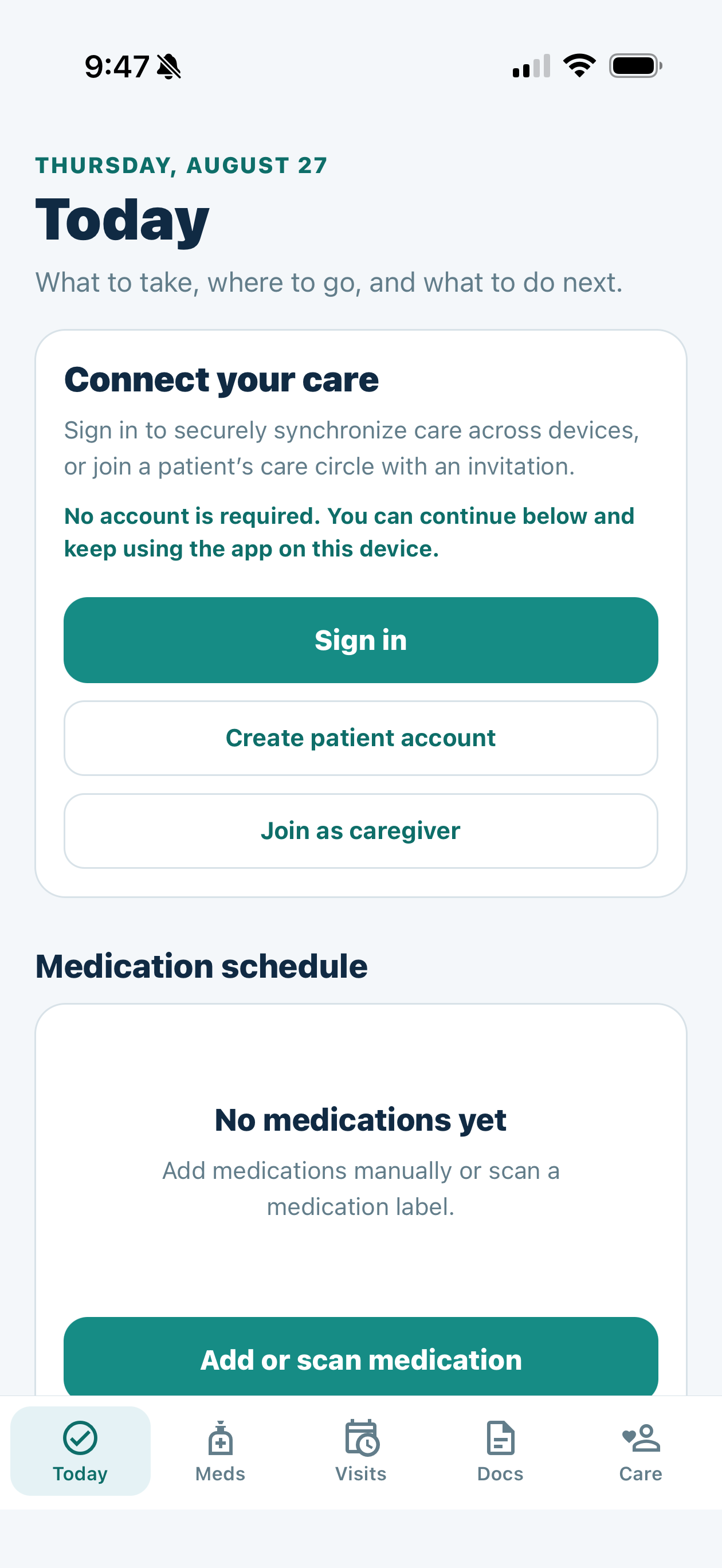
MyHealthVaultAI helps patients organize medications, appointments, visit information, documents, and caregiver access across otherwise disconnected parts of care.

iOSAndroidMedication remindersCare continuity
Explore MyHealthVaultAI
01Medication clarity

Medication lists, reminder timing, label capture, and patient-confirmed changes help keep the active regimen understandable.

02Visit continuity

Appointments, visit capture, structured summaries, and follow-up tasks keep important details from disappearing after the encounter.

03Records in context

Documents and health information live alongside the visits and medication decisions they help explain.

04Caregiver connection

Permission-based caregiver access supports continuity while keeping patient control visible and explicit.

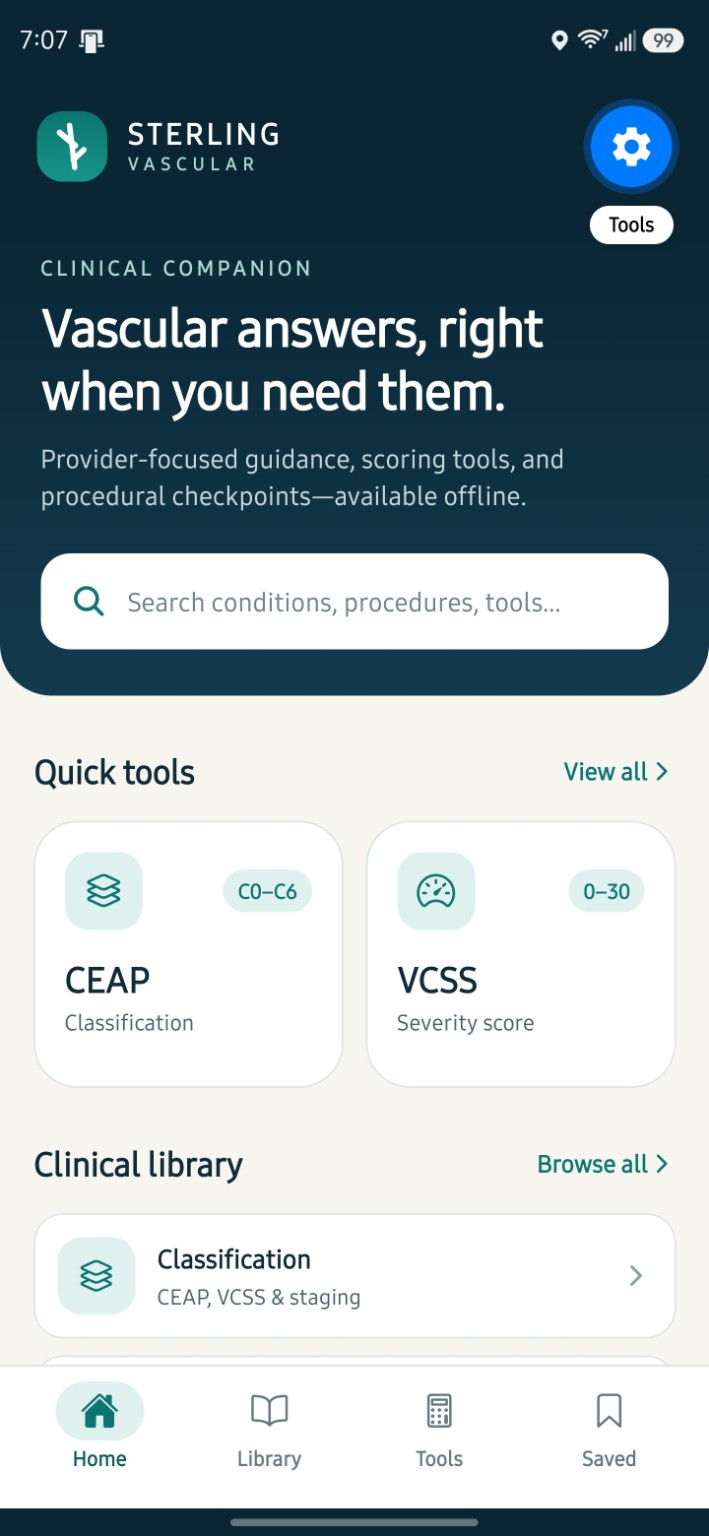
Sterling Vascular Mobile

Clinical reference at the point of care.

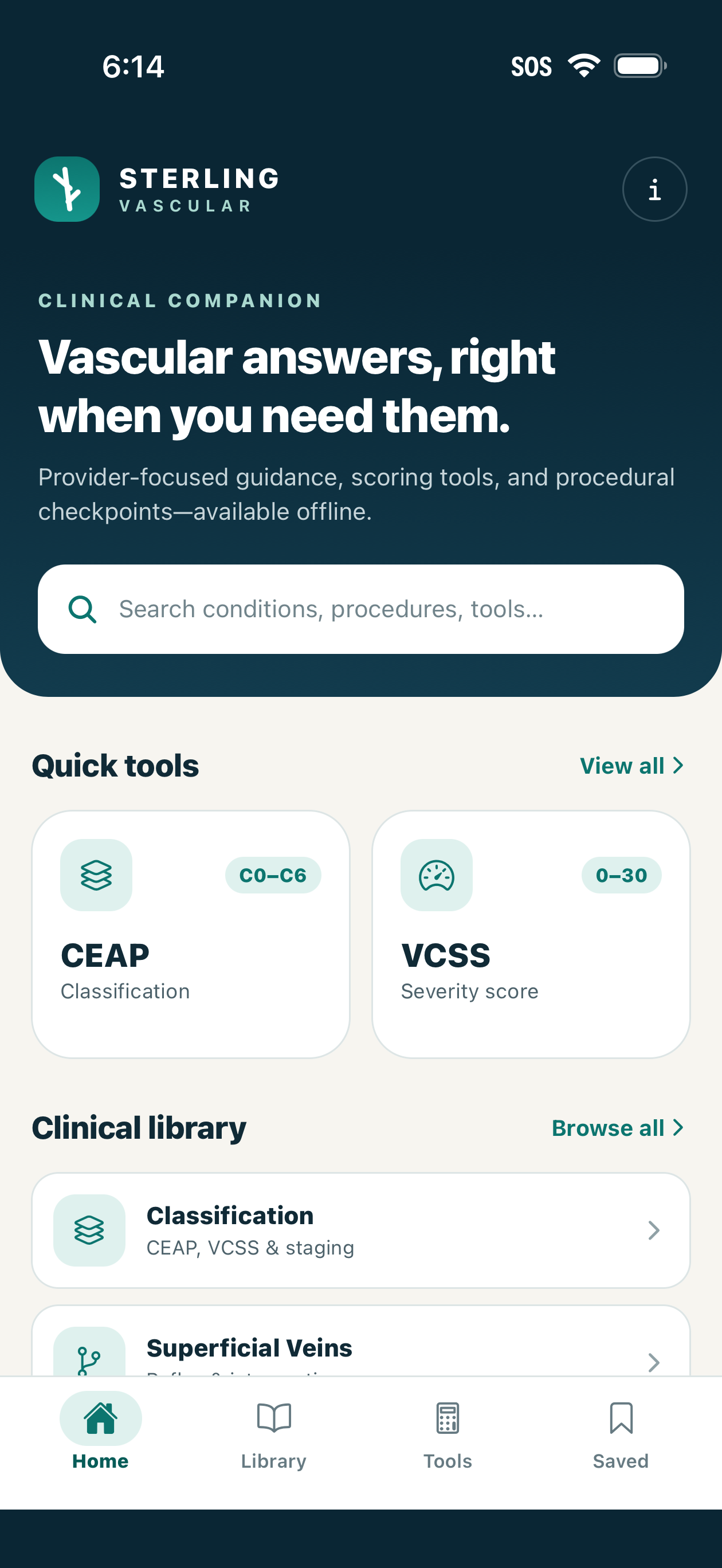
Built for clinicians who need fast access to vascular classifications, scoring tools, procedural checkpoints, and concise disease-management guidance without leaving the clinical workflow.

iOSAndroidOffline referenceProvider-focused
Explore Sterling Vascular
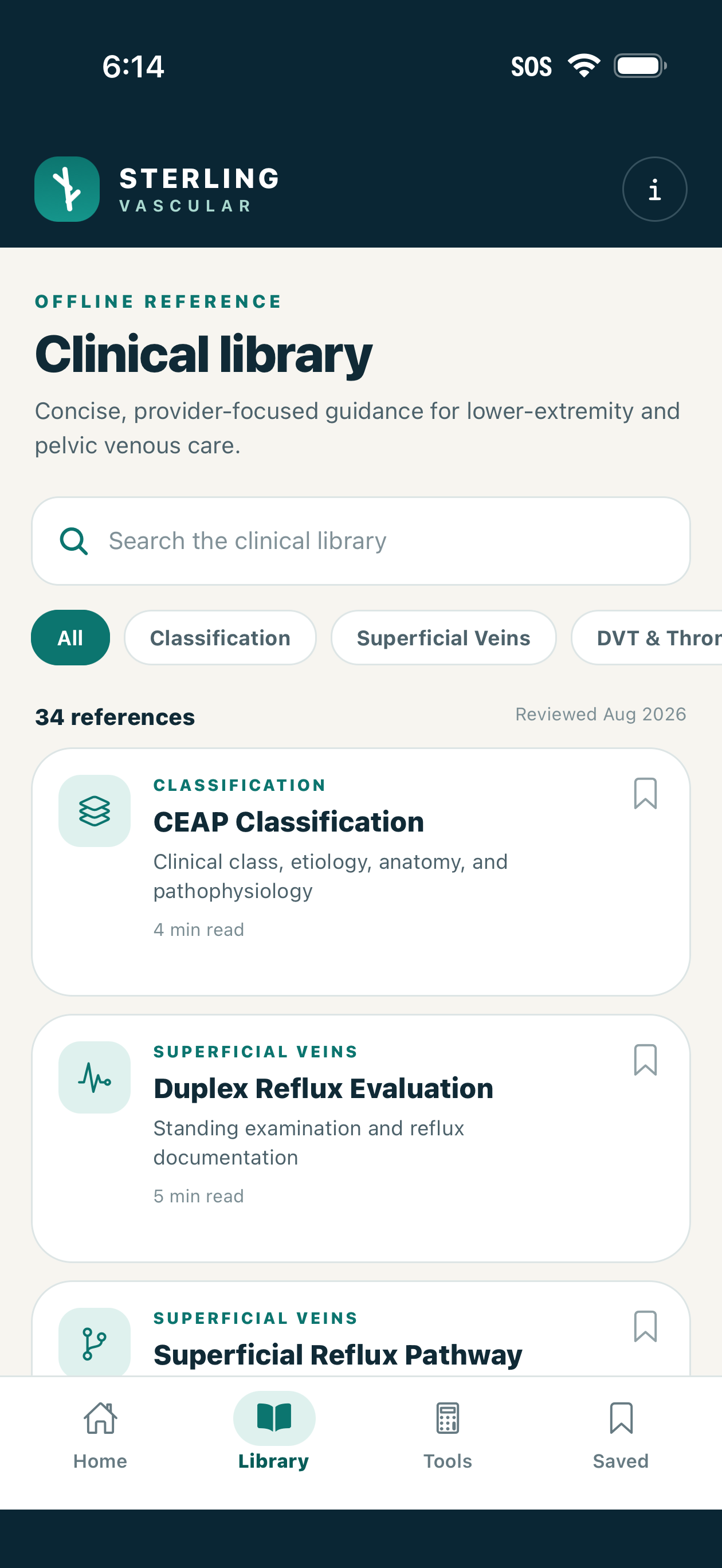
01Searchable library

34 concise clinical references spanning classification, venous disease, thrombosis, wounds, and procedures.

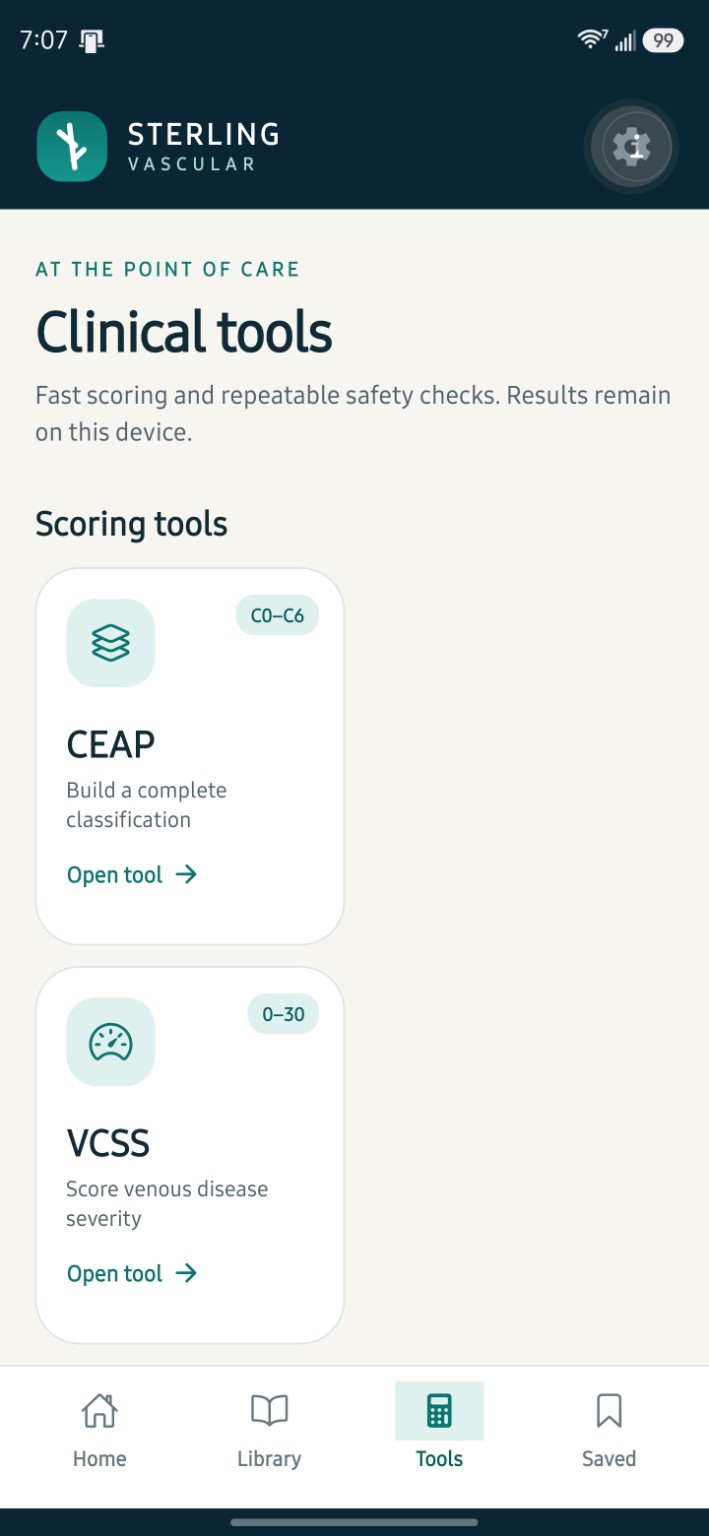
02Point-of-care tools

CEAP and VCSS scoring with repeatable clinical safety checks designed for fast use.

03Procedural guidance

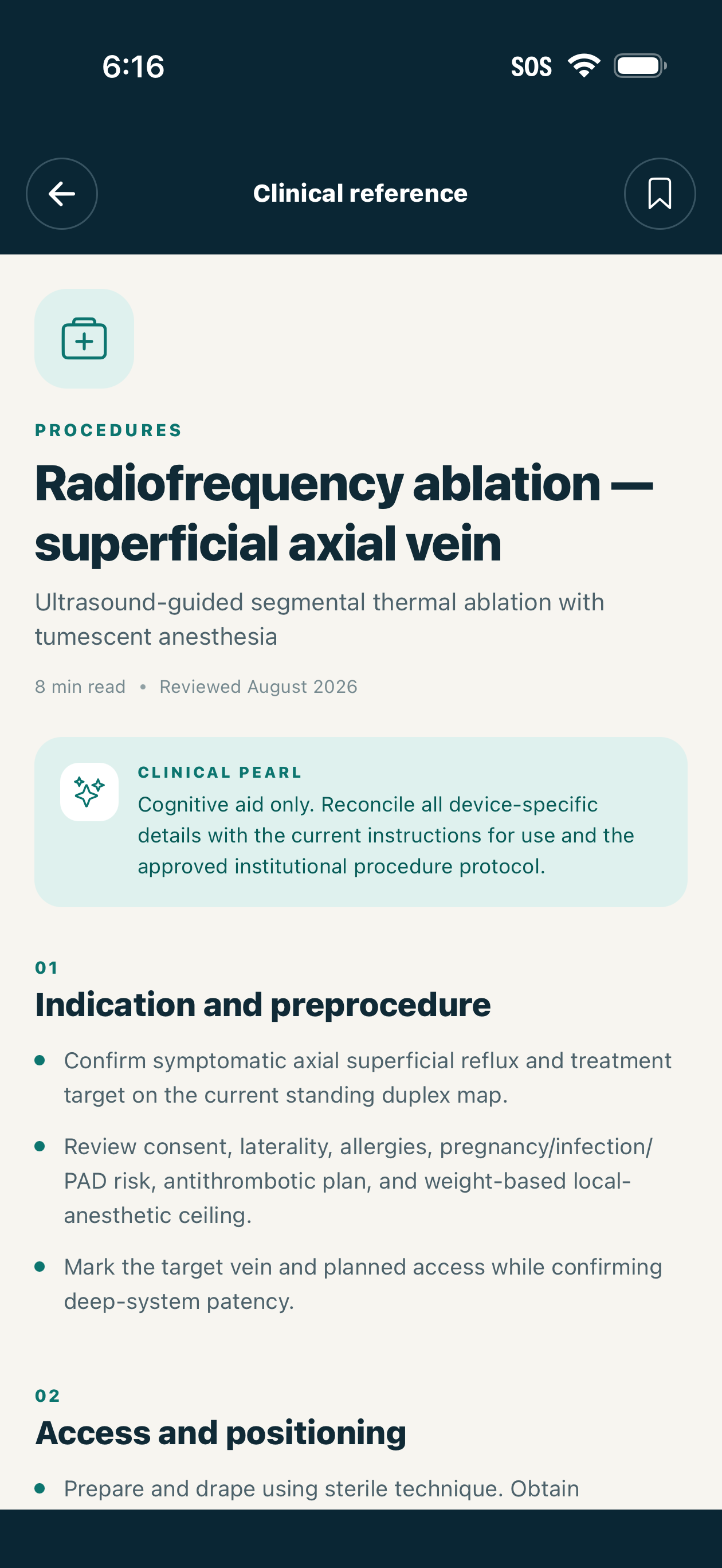
Provider-focused checkpoints for procedures such as superficial axial vein radiofrequency ablation.

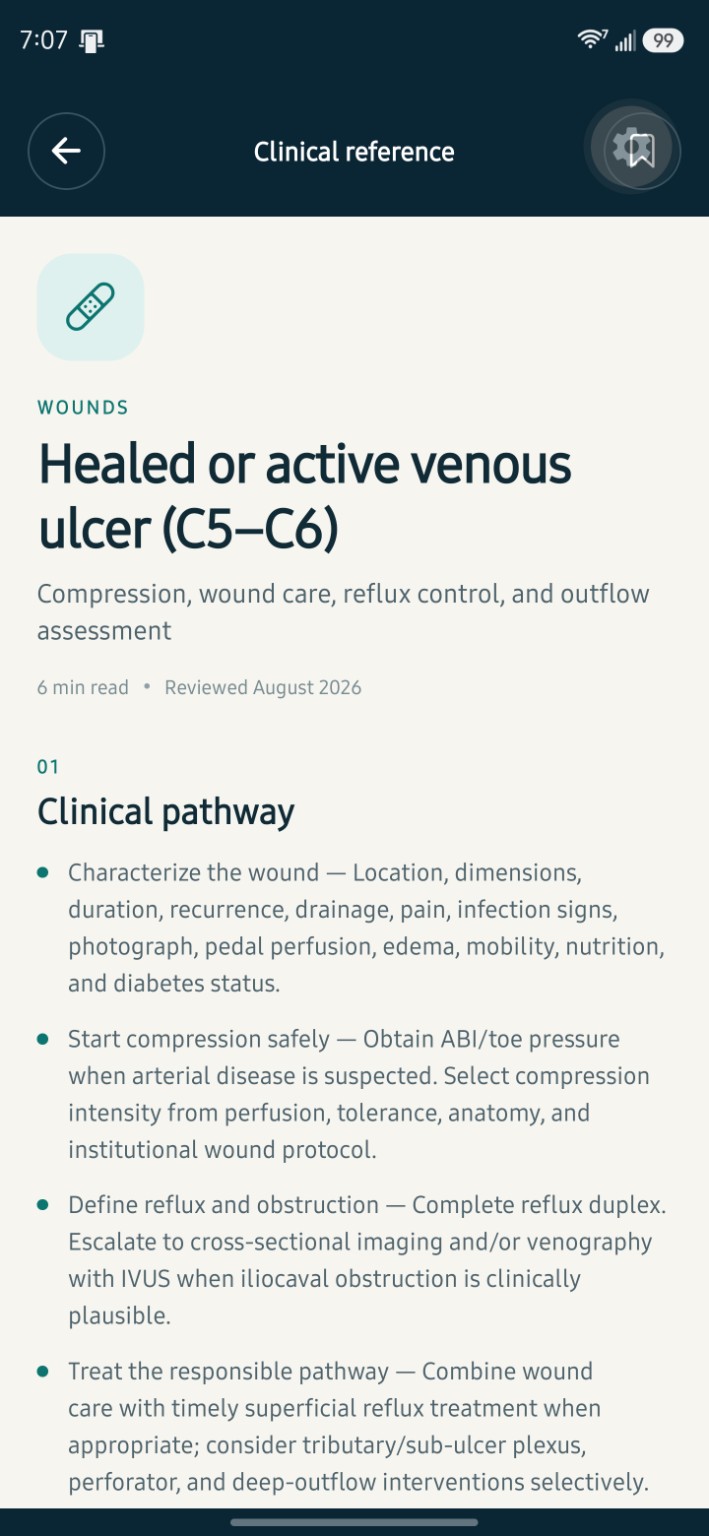
04Disease pathways

Structured guidance for complex presentations including C5–C6 venous ulcer management.

A governed intelligence architecture

From raw signal to responsible action.

Every layer should make the next layer safer, clearer, and easier to audit.

01

Observe

Capture the relevant clinical signal

02

Structure

Normalize the information and context

03

Reason

Apply rules, models, and evidence

04

Explain

Show rationale, limits, and uncertainty

05

Decide

Keep accountable humans in control

How we build

Trust is an architectural requirement.

Clinical technology earns trust by being useful, constrained, understandable, and honest about uncertainty.

01

Clinician-led

Technology is designed around the way care is actually delivered—not around a generic software workflow.

02

Governed by design

Deterministic safety layers, transparent limits, and human approval remain visible at every consequential step.

03

Traceable

Recommendations should expose the inputs, governing rules, uncertainty, and source context that shaped them.

04

Continuity-centered

Useful intelligence follows the patient and the care process across visits, teams, and disconnected systems.

The horizon

Building toward healthcare that remembers, reasons, and communicates.

Our direction is not autonomous medicine. It is better-supported human care: more complete context, clearer decisions, and fewer points of failure between one encounter and the next.

01

Longitudinal health intelligence

Transform fragmented visits, medications, records, and patient-reported information into an understandable clinical narrative over time.

02

Specialty decision environments

Pair authoritative classifications and structured pathways with context-aware support for focused clinical domains.

03

Responsible workflow augmentation

Reduce cognitive and documentation burden while preserving professional judgment, review, and accountability.

About the company

Clinical experience translated into better systems.

Sterling Health Technologies is a healthcare innovation company founded by Sloane Sterling, PA-C. The company develops human-centered technologies grounded in real clinical workflows, specialty expertise, and the practical needs of patients and care teams.

Our standard

Useful enough to improve the work. Transparent enough to question. Constrained enough to trust.